

Our story
Shade-grown.
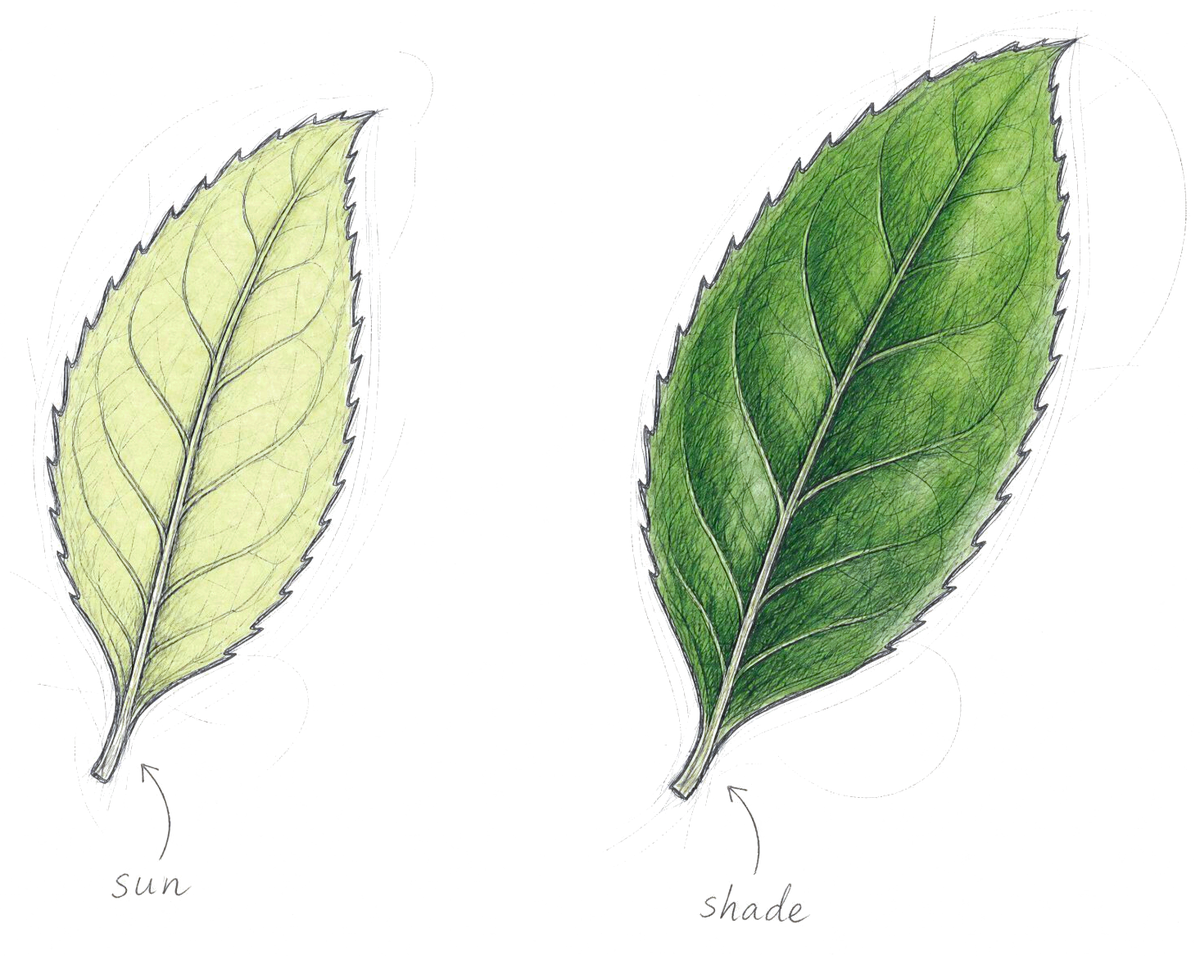
Every matcha starts in the dark. Before harvest, the tea leaf is covered from the sun, and that's where its richness comes from. The best work is made the same way.

It started with a broken foot.
Spring 2024. Brandon Fassberg, our founder, and his girlfriend, Chrissy, spent two weeks in Japan. We drank matcha lattes everywhere we went and learned how much the grade and the leaf change what ends up in the cup.
Then, climbing the stone steps under the red torii gates of Fushimi Inari in Kyoto, Chrissy broke her foot.

The best harmonica solo in Japan.
Chrissy kept going. Off the train in Uji, we stopped into a small husband-and-wife tea house on the river for matcha lattes. Before we'd even ordered, the owners had found her a walking stick and something for the pain. Then came a harmonica solo. Then, the perfect iced matcha latte.
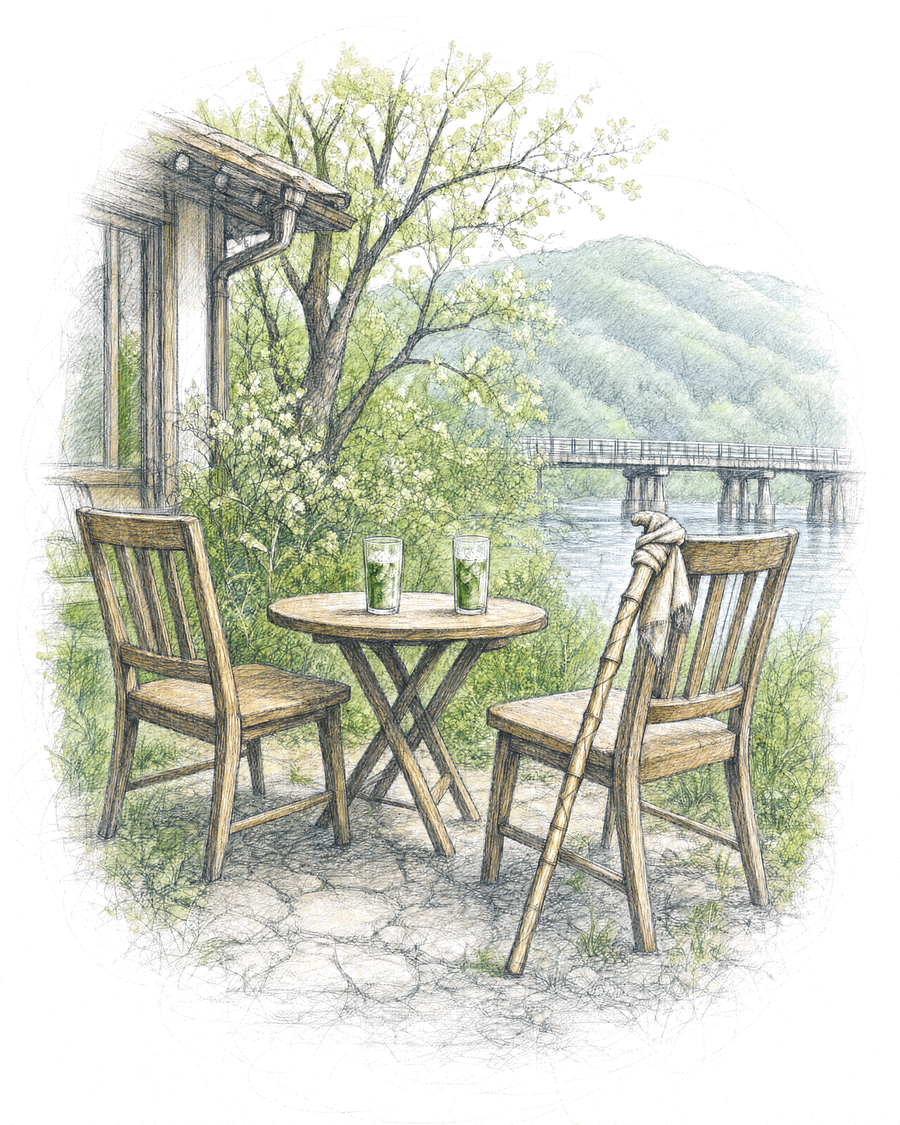
By the Uji River.
Uji is where tea growers started shading their plants centuries ago, and where modern matcha was born. Right there by the water, we sat with those lattes and kept asking one question: how do we bring a matcha latte this good to the US, without compromising on flavor, function or process?
That's when we got to work.
What was missing.
We didn't learn matcha from a label. We learned it on the ground in Japan, at the source. Back in New York, a matcha latte cost $8 to $11 plus tip and ten minutes in line, and too often it was sugary green milk. Matcha was meant for more.
We love whisking matcha at home when there's time. Most days, there isn't. On the shelf, matcha meant another tin of powder, with the whisk, the milk and the sweetener left to you.
We couldn't find the whole latte, at café quality, ready anywhere in ten seconds. Everyone told us to sell another tin. We decided to make the whole latte instead.

Twenty recipes later.
We tested more than 20 recipes in our kitchen: too sweet, not sweet enough, watery, grassy, bitter. A blind taste test in our living room picked the winner, and friends and family confirmed it. Then we put the whole latte in a single-serve pouch.

The 10-second oat latte.
Each pouch holds the whole latte: 3.5 grams of latte-grade matcha from Japan, about three times an average café latte, with oat milk powder, allulose, MCT, sunflower lecithin and sea salt. Six ingredients. We chose latte grade on purpose. Ceremonial grade is made for a bowl and hot water; latte grade stands up to oat milk, so you taste the matcha first. Add water, shake for ten seconds, and get back to work. A 5-Pack works out to $6.40 a latte.

Who it's for.
Creators who love matcha and hold their lattes to a high standard: designers, editors, producers, chefs, artists and founders. The ones putting in the hours nobody sees yet. Long creative days need delicious fuel: matcha first, sweet second.
Our goals for you are simple: give you back the time a café run takes, put a latte worth drinking wherever the work happens, and build a community that celebrates the progress behind the scenes.
Why DARK MODE.
We launched under our first name in SoHo on 06.27.26 and spent a few good hours with New York's matcha latte drinkers. Then we went back into the shade to build something deeper.
Like the tea leaf, shaded from the sun before harvest, most builders build in the dark. Without applause. Without praise. We celebrate those moments. When we're in DARK MODE, focused on meaningful creative work.
Founded and led by Brandon Fassberg. Made in Queens, NY, where every pouch is packed and shipped.

RICHNESS GROWS IN THE DARK.

Uji, Japan
First shade.
Brandon, our founder, and Chrissy spent two weeks in Japan, drinking every matcha latte they could find. In Uji, at a small husband-and-wife tea house on the river, they found the perfect iced matcha latte.
Uji is also where tea growers started shading their plants before harvest. That craft, ōishita, is what makes matcha richer.
It's where the idea began.
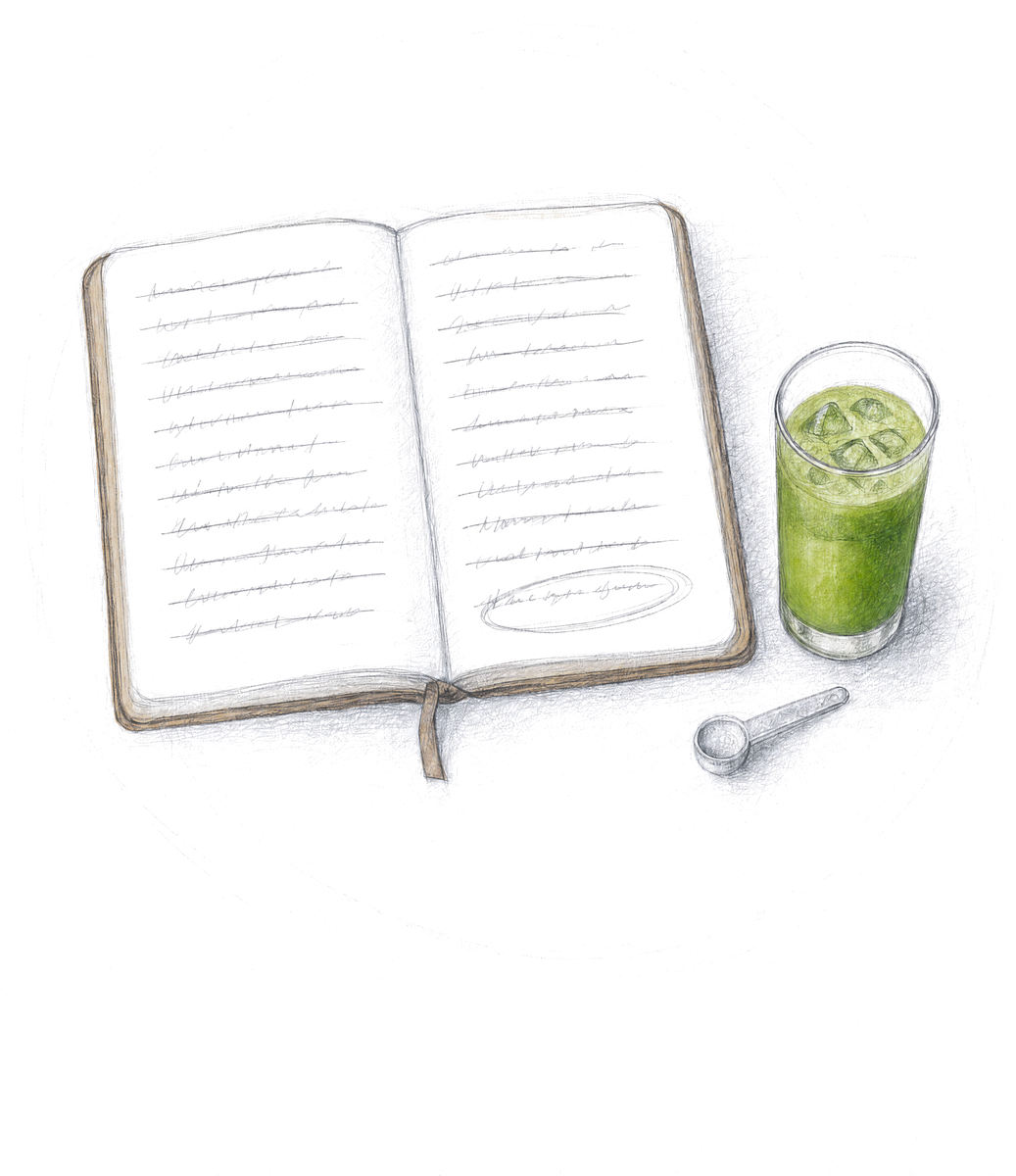
The concept forms
Ten seconds.
A café matcha latte costs $8 to $11 with tip and usually holds 1 to 2 grams of matcha.
We started designing a portable pouch that could rival the café standard in ten seconds.
Cold in a tumbler. Hot in a mug. Six ingredients, no fillers, no theater. A blueprint built on what we love about the café, and what the home ritual still deserved.

Drop 001 launches
120.
Drop 001 went public.
120 numbered Foundation Kits. Our first Founding Members. The concept had legs. The community showed up.
Not a launch. A ceremony. Every kit numbered. Every card signed.
Every founder invited into the room before the door opened wider. The shading period officially began — the quiet stretch between
debut and evolution, where the brand would grow into its name.
Growth in the shade
Deeper.
Email, SMS, and live-shopping communities compounded quietly. Retail conversations opened. Wholesale partners reached out. National grocery buyers took meetings.
Every week added weight to what would become the next chapter. Nothing to prove, nothing to announce — just the deep, unseen work of building the roots that would eventually hold up the tree.
This is where the brand became what it is.

Same team. Same product. Deeper story.
Emerged.
Drop 001 was the introduction.
DARK MODE is what emerged from the
shading period — a name that describes the transformation from leaf to latte, and from concept to category-defining brand.
Same team. Same 10-second product.
Deeper story. The shading period gave us clarity: this isn't just a matcha company. It's a ritual. A rhythm. A way of protecting the hours that matter most.

DARK MODE launches
GO DARK. LOCK IN.
The 5-Pack ships nationwide. The DARK MODE™ ritual becomes a daily standard.
A category that never had a 10-second answer finally has one.
No more waiting in line. No more compromising on grade, dose, or ingredients. Just tear, shake, sip — and get back to what you're building.
RICHNESS GROWS IN THE DARK.


